
Rethinking the Modern Private Estate as a Living Brand
A private estate is no longer just a beautiful home tucked behind a gate. For many ultra-high-net-worth families, it feels closer to a living brand, with its own mood, rhythm, and signature way of caring for people. Every detail sends a message, from how guests are greeted on a late-summer afternoon to how the household moves when the principal arrives after a long flight.
Old models of “butler and staff” tend to break down here. They were built for one house, one generation, predictable seasons, and simple entertaining. Today, principals often move between several homes, host immersive gatherings, and blend work, wellness, and family in the same spaces. Without a clear, modern structure, even the most loyal staff can end up scrambling instead of creating calm.
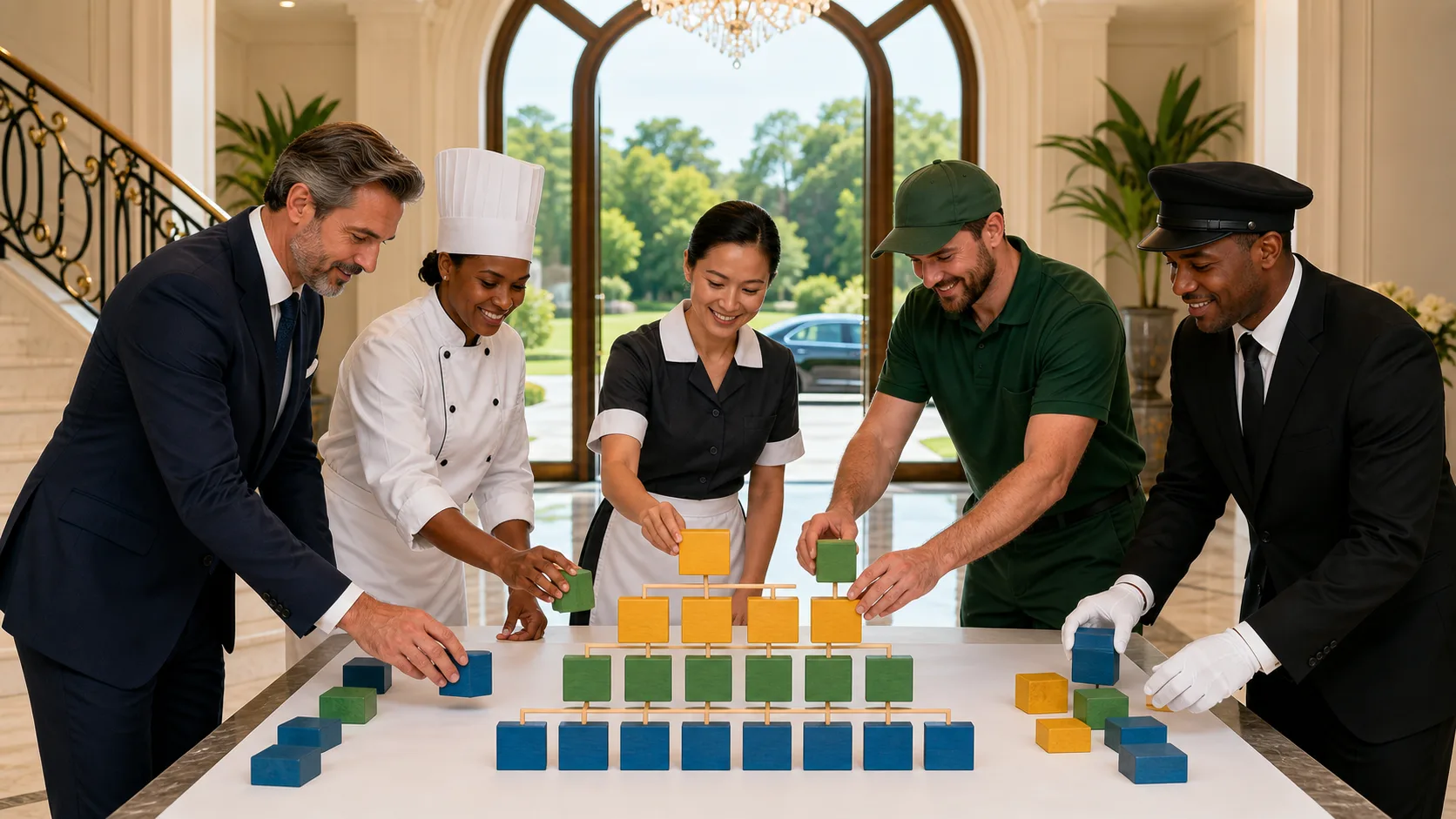
When we talk about a modern org chart for private estate staffing, we are not talking about titles for the sake of titles. We are talking about clarity. Who owns what, who decides what, and how everyone works together so service feels graceful, natural, and nearly effortless for the principal and their guests.
From Household Staff to Experience Architecture
Traditional household roles focus on tasks. Clean this, press that, drive here. The work is important, but it only tells part of the story. The real goal is not just a spotless room or a plated meal; it is how life feels inside the estate.
Modern private estate staffing shifts from task-based to experience-based thinking. Instead of asking, “Who will serve lunch?”, we start asking, “What should this day feel like for the principal and their guests?” That is where experience architecture comes in.
This might include roles or accountabilities such as:
- A point person for arrivals and departures, who choreographs timing with drivers, security, and reception
- Someone who thinks about sensory details, like lighting, scent, and music across the property
- A coordinator who keeps continuity between the city residence, countryside home, and yacht so nothing feels “off” when the principal moves between them
We often borrow from luxury hospitality, but we do not copy it. Guest journey mapping, thoughtful service rituals, and clear standards can work beautifully in a private setting, as long as there is room for nuance. A hotel task list may not fit a home where the principal wants barefoot children in the kitchen and complete quiet in the study, all at once.
Designing a Modern Private Estate Org Chart with Intention
A strong estate team starts with a clear leadership spine. Titles can shift, but the structure should answer three basic questions: Who leads overall, who leads each function, and how do they work as one team across properties.
For many estates, we often see a central layer such as:
- Estate Director or Chief of Staff, who holds the whole picture of the principal’s life and priorities
- Director of Residences, who oversees the operation of multiple homes and local leaders
- Head of Service and Head of Housekeeping, each guiding standards, training, and daily performance
- Specialist leaders, such as a Culinary Director, Director of Wellness, or Director of Experiences
Right-sizing matters. A principal with one primary home and a small retreat property will need something different from a family with four activated homes, frequent yacht use, and constant guests. When we design an org chart, we look at:
- Number and type of properties
- Travel rhythms across seasons
- Privacy expectations and media exposure
- Philanthropic and business hosting needs
- Level of year-round activity vs seasonal surges
Clear reporting lines are not about ego; they are about protection. Without them, invisible labor often lands on the “fixer” on the team, the trusted person who simply gets things done until they quietly burn out. Documented responsibilities, shared calendars, and aligned expectations keep the experience smooth without grinding down the very people who make it possible.
Setting Service Standards That Feel Personal, Not Scripted
When service standards feel stiff, a private estate can start to feel like a resort lobby. Most principals do not want that. They want warmth, ease, and a sense that everyone just “gets” them, without anyone acting like they are on stage.
Translating personal values into daily service is one of the most meaningful steps in building a team. This often becomes a “house playbook,” a living guide that can include:
- Arrival preferences for principals and guests
- Rituals for family holidays, long weekends, and school breaks
- Guidelines for how children and pets are welcomed and cared for
- Wellness norms, such as quiet hours, tech use, and food preferences
- Security touchpoints, including what is visible and what stays discreet
- Tone of communication, both among the team and with the family
Done well, service standards protect everyone. The principal can relax, knowing their boundaries and preferences are understood. The staff gains clarity and confidence, with a shared language for excellence. When new hires join, they do not guess, they learn, practice, and add their own thoughtful touches within clear guardrails.
Creating Real Career Paths Beyond Traditional Hospitality
Many senior hospitality leaders reach a point where they want to build something more personal, more lasting, and less transactional. Private estate staffing can offer that, when it is set up with care. The work is still demanding, but it is focused on depth over volume.
We often see talent move from:
- Hotel Director of Rooms into an Estate Director or Director of Residences role
- Executive Chef into a Culinary Director role overseeing several homes and styles of dining
- Spa Director into a Director of Wellness and Lifestyle role that blends fitness, recovery, and daily ritual
The key is seeing the estate as an ecosystem, not a collection of one-off hires. When principals invest in development, mentorship, and thoughtful progression, they build loyalty and memory into the estate. People stay long enough to know the history of family traditions, the rhythm of late summer gatherings, and how needs change across life stages.
Partnering to Build an Estate Team That Grows with You
An estate org chart is not something you create once and then forget in a drawer. It should evolve as life evolves. Children grow up, parents age, travel patterns change, and properties are added or scaled back. Service that felt right five years ago may feel too formal, or not protective enough, now.
A specialized search partner can help by holding a neutral view of the structure, benchmarking roles across similar estates, and quietly sourcing leaders who are not just good operators but true stewards of the experience. At The Reserve Talent Group, we see private estates in the same way we see the finest luxury hospitality settings, as living brands that deserve thoughtful leadership and teams who can grow in place over time.
When principals, family offices, and advisors treat private estate staffing as a long-term strategy instead of a series of quick hires, the result is clear. Life at home feels calmer, more intentional, and more aligned with who they are and how they want to live, in every season and in every residence.
Elevate Your Estate With Trusted, Discreet Talent
When you are ready to secure a trusted household team, our experts at The Reserve Talent Group are here to guide every step of the process. Explore our tailored private estate staffing solutions to match your home’s unique standards, schedule, and lifestyle. We take the time to understand your priorities so we can introduce only the most qualified, discreet professionals. If you are ready to begin, simply contact us to schedule a confidential consultation.